Rain Garden
A Rain Garden is a simplified form of bioretention cell, which takes advantage of rainfall and stormwater runoff in its design, simultaneously contributing to the reduction of runoff volume and pollutants released from the site. Typically, it is designed as a small garden with selected types of vegetation resistant to the extended periods of high moisture and extreme levels of nutrient concentrations (Nitrogen and Phosphorus) found in stormwater runoff.
The different layers comprising rain gardens are presented in the figure below. These include:
- Surface
- Soil.
Surface storage, surface infiltration, the collecting area run-on, surface evaporation, and overflow occur on the surface.
In the soil layer occur storage in the soil's voids, evapotranspiration (loss due to the plant root action) and infiltration (leakage) to the native surrounding soil through the bottom. The infiltration is controlled by the characteristics of the surrounding soil.
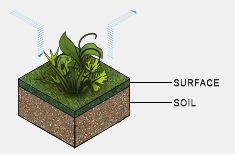
Figure: Rain Garden process layers